
New Survey Data Reveals the Moving Scam Warning Signs Consumers Need to Know
Key Takeaways
Red Flags That Signal a Moving Company Scam
- Requests for large upfront deposits
- Unclear pricing or unexpected fees
- Refusal to provide details in writing
- No verifiable physical address or license information
What the Moving Scam Data Reveals
- Nearly 1 in 2 consumers encountered at least one problem during their most recent move, such as hidden fees, price spikes, damaged goods, or an unreachable company.
- Unclear pricing and unexpected fees are the top reasons, cited by 35.6% of consumers, for avoiding a moving company.
- Only 27.6% of respondents verified a moving company’s licenses, insurance, or official records before hiring.
How to Protect Yourself When Hiring a Mover
- Verify licensing and insurance through official records.
- Request a written estimate before committing.
- Compare at least two to three companies.
- Work with a licensed and insured moving company.
Table of Contents
- Overview of the 2026 Consumer Moving Scams Survey
- How Consumers Research and Hire Moving Companies
- Moving Scam Warning Signs Consumers Say Matter Most
- Experiences After Hiring a Moving Company
- Trust Signals Consumers Look for When Hiring a Moving Company
- How Well Consumers Know Moving Scam Risks
- What to Do If You Suspect a Moving Company Scam
- Pre-Move Checklist for Hiring a Moving Company
- How to Identify Moving Brokers
- Conclusion
Overview of the 2026 Consumer Moving Scams Survey
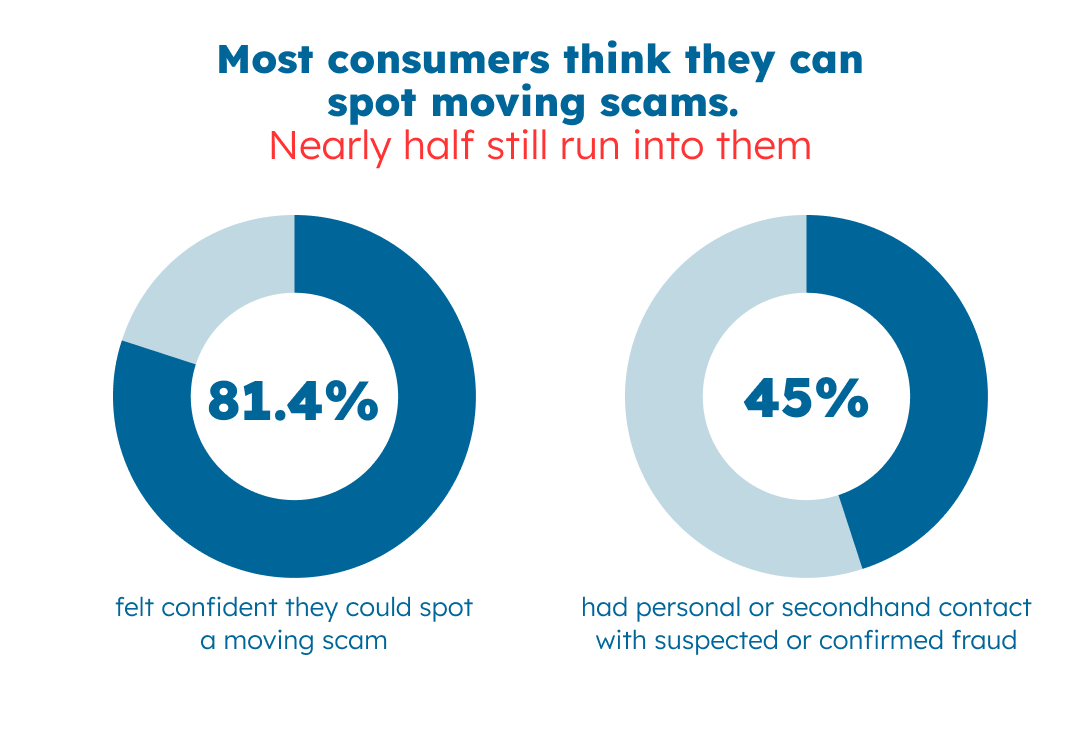
Moving company scams don’t always look like theft. Rogue companies adapt to the warning signs consumers look for, finding new, sneakier ways of separating you from your cash or belongings. Our recent survey shows the results: 81.4% of respondents felt confident they could spot a moving scam. 45.2% still encountered problems.
It’s no surprise that bad actors take advantage of those on the go. Moving sees homeowners at their most time-stressed and financially vulnerable, with no choice but to put their life’s possessions in the hands of strangers. Choosing a moving company is an act of great trust — and one that deserves more care.
The 2026 Consumer Moving Scams Survey shows why. The survey asked 500 recent movers in the U.S. and Canada about their real experiences with moving companies. The audience was split evenly between the U.S. and Canada. Every respondent had moved within the past two years. The group skewed younger, with 59% between ages 25 and 44. Another 22% were 45 to 54, 12.4% were 55 to 64, and 6% were 65 or older.
The data points to one hard truth: consumers know moving scams exist. But many still miss the steps that help protect them.
In this article, we examine how people research movers, what makes them trust a company, which red flags stand out, and what problems they faced after booking. Then, we’ll provide real-world insights into how to avoid moving scams and tips for hiring movers you can trust.
How Consumers Research and Hire Moving Companies
Most people do some research before hiring movers. The problem is that many stop too soon.
According to the survey, 21% hired the first moving company they found without looking for alternatives. Another 32.2% compared two companies, and nearly 30% said someone else handled the moving company selection for them. Only 17.2% compared three or more companies themselves.
That leaves a lot of room for risk.
Research Sources
Unsurprisingly, 60.6% of respondents used online research to look for a mover. Recommendations from friends or family accounted for 37.2%. Review sites followed at 31.8%. A smaller but notable group, 10.6%, used AI tools such as ChatGPT or Gemini.
While those steps can help, they may not be enough to identify trusted moving companies.
The Credential Gap
People are researching movers, but they’re not always checking the details that matter most. We call this the credential gap.
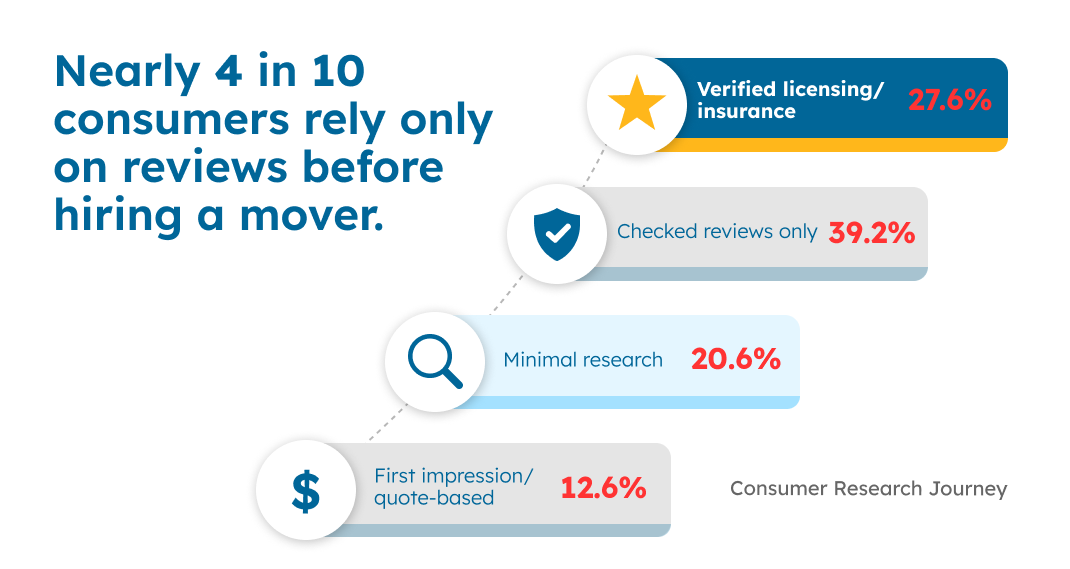
Only 27.6% of respondents verified their moving company’s licensing, valuation coverage or official records. A concerning 39.2% checked online reviews only, 12.6% relied on the quote and first impression, and 20.6% did little to no research at all.
This is the heart of many moving company scams. Star ratings can be bought, faked or manipulated. AI-generated reviews can be propagated across review aggregators to create a rosy, but completely false, company profile.
To bridge the credential gap, don’t settle for your first impression. Take the time to check state or federal licensing, verify valuation coverage and ensure the company has a real, physical location. It’s the best way to make sure the company is who they say they are and does what they say they do.
Learn more: What to Ask When Hiring a Moving Company
Moving Scam Warning Signs Consumers Say Matter Most
While the credential gap remains a serious issue, consumers still know some warning signs that can help them spot a moving scam. Watch for these signs as you research moving companies.
Red Flags That Raise Immediate Concern
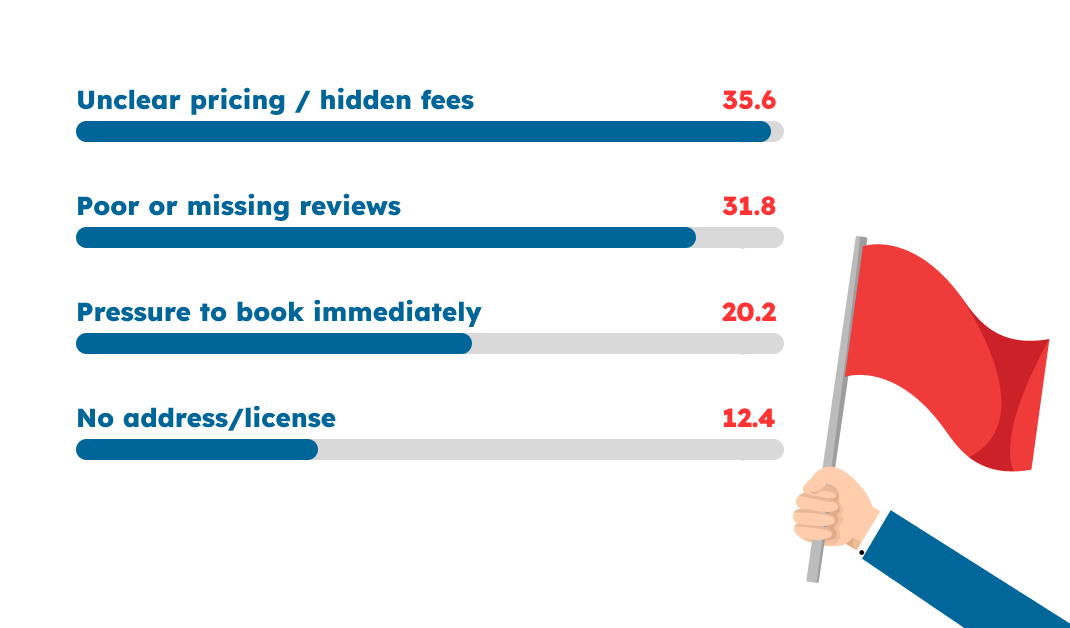
We asked consumers what would make them immediately reject a moving company. The results showed that transparency is essential:
- Unclear pricing or unexpected fees: 35.6%
- Poor or missing online reviews: 31.8%
- Pressure to book immediately or risk losing the price: 20.2%
- No physical address or verifiable license information: 12.4%
Other, less-obvious warning signs of a moving scam include brokers who give pricing without an inventory list, high-pressure sales tactics disguised as “limited-time offers,” and reviews that use the same language across different platforms.
Remember, the scammer’s goal is to get your money however they can. While they know how to hide common warning signs, their most reliable trick is simple: requesting cash up front.
Deposit Requests: A Primary Scam Signal
When asked which warning sign concerned them most, 22.4% said refusal to provide details in writing, 19.6% said suspicious or limited review history and 19.2% said an unusually low quote.
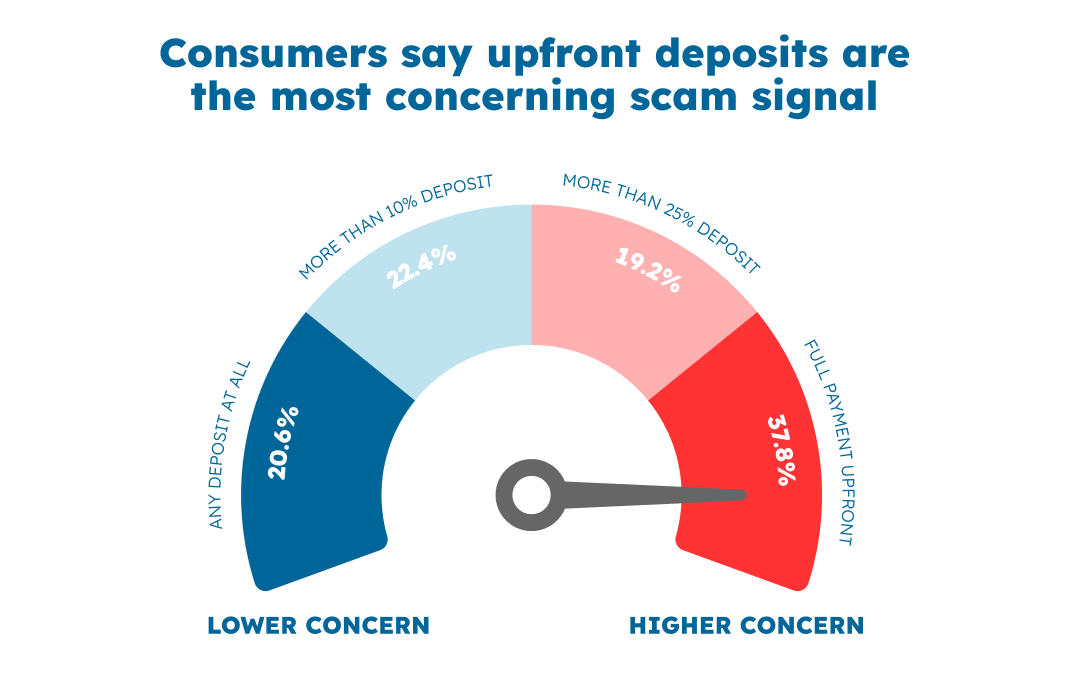
But an overwhelming 38.8% of respondents said that a request for a large upfront deposit was the most concerning sign of an untrustworthy mover. We asked respondents what a suspiciously “large” deposit means to them:
- Full payment upfront: 37.8%
- More than 25% of the total estimate: 19.2%
- More than 10% of the total estimate: 22.4%
- Any deposit at all: 20.6%
A deposit is not always a scam. But a large deposit should make you think twice.
When comparing estimates, always ask what the deposit covers and if it applies to the final cost. Ask for the cancellation terms in writing. If a company pressures you to pay before it explains the terms, walk away.
Learn more: Moving Scam Warning Signs
What the Data Reveals About Experiences After Hiring a Moving Company
Beyond revealing consumer fears about predatory movers, the survey shows that these fears are based in fact. Let’s explore what the data says about bad moving experiences across the industry.
Real Problems Reported During Recent Moves
Nearly half of respondents (45.2%) experienced at least one problem during their most recent move:
- The moving company added fees that were not disclosed upfront: 20.6%
- The final price was significantly higher than the quote: 19.6%
- The company was difficult to reach after booking: 12.4%
- Delivery of belongings was delayed with no explanation: 9.4%
- Belongings were damaged, and the company denied responsibility: 9.0%
These real (and common) experiences show why clear, written terms matter. A concrete agreement that covers every aspect of the moving process is the best way to avoid common scams like surprise fees and vague quotes.
Moving Fraud Reaches Further Than You Might Expect
Many people walk into moving company scams because they assume dishonest movers are rare or a thing of the past. Unfortunately, the survey reveals that this isn't the case.
Of respondents, 14.6% had personal experience with a suspicious or fraudulent moving company. Another 19.6% knew someone who had, and a further 10.8% suspected fraud but weren’t sure. Combined, 45% of people who moved in the last 2 years had direct or indirect exposure to moving company fraud.
These findings reveal that moving fraud is not a fringe issue. These incidents are ongoing and hit close to home. While sobering, the data should empower homeowners to take the risks seriously. Next, we'll discuss what consumers look for in a trusted moving company.
The Trust Signals Consumers Look for When Hiring a Moving Company
The survey revealed that while consumers have a good idea of what trust signals to look for, other, less reliable signals can influence their decision.
The Trust Signals That Carry the Most Weight
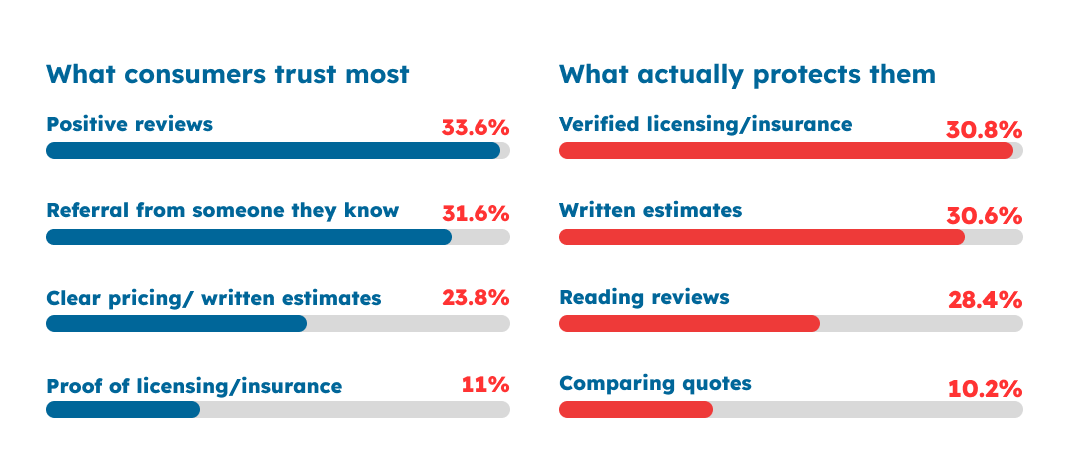
For 33.6% of respondents, positive reviews were the strongest trust signal for a given moving company. 31.6% said they preferred a referral from someone they know. Only 23.8% said clear pricing and written estimates carried the most weight, and 11% said proof of licensing or insurance.
Personal referrals and good reviews are often valid and shouldn’t be ignored, but they don’t provide the whole picture.
The Most Protective Pre-Hire Steps Consumers Identify
When asked what would make them feel most protected, respondents chose concrete actions over third-party reviews.
Verified licensing or insurance (30.8%) and written estimates (30.6%) made respondents feel the most secure about trusting a company with their move. Reading reviews (28.4%) and comparing quotes (10.2%) offered less assurance.
What Consumers Trust vs What Actually Protects Them
Consumers may trust reviews instinctively, but they know official licensing and written estimates offer stronger protection.

Reviews help you feel confident, especially if you’re pressed for time. But even legitimate reviews only cover past experiences; they don’t account for the company’s standing. In addition to quality reviews and referrals, look for FMCSA registration, active USDOT numbers and moving valuation coverage. These factors indicate the company has complied with regulations put in place for your protection.
This is where trusted movers stand apart. Established companies, like North American Van Lines, don’t make you hunt for basic information. You should be able to read reviews, understand costs and verify licensing and government registration upfront, well before booking your moving date.
Learn more: How Moving Companies Are Regulated
How Well Do Consumers Really Know Moving Scam Risks
The survey revealed that the vast majority of consumers (81.4%) thought they could spot a scam before their move. 31.2% felt “very confident,” and another 50.2% felt “somewhat confident.” Yet, as we noted earlier, 45.2% still experienced at least one problem.
This is what we call the confidence gap.
Whether through experience or a lack of it, consumers believe they can recognize a bad mover, or that fraud happens to other, less careful people. But smart scammers don’t work like that.
When hiring a mover, consumers were most concerned about unexpected fees or charges (24.8%), belongings getting damaged, lost or held (23.6%) and the quoted price changing after booking (15.8%). The data show a pattern: Consumers are most worried about issues that arise after they’ve signed a mover.
Unsurprisingly, those fears match the problems consumers later reported, particularly undisclosed fees (20.6%) and a final price significantly higher than the agreed-upon quote (19.6%).
While most consumers believe fraud won’t happen to them, the data says otherwise. The next step is bridging the confidence gap by turning awareness into action.
Learn more: Understanding Moving Company Pricing
What to Do If You Suspect a Moving Company Scam
If a mover starts to feel wrong, don’t ignore your instincts. Here are a few steps on how to avoid moving scams.
Before Moving
- Search for complaints that match your experience. If the company has a history of behavior that’s making you uneasy, it’s time to walk away.
- Report the company through the National Consumer Complaint Database for interstate moves, or your state’s consumer protection agency for intrastate moves.
- Stop communicating with the company and look into more trusted movers.
While Loading
- If the crew changes the price or suggests new services before your items are loaded, pause the move.
- Do not sign blank or altered paperwork. Ask for a written explanation of any new charges before loading continues.
- Take photos of the truck and any paperwork, including any changes to the estimate. The FMCSA recommends having the estimate, bill of lading and inventory pages available when filing a fraud complaint.
- Contact the company’s main office for clarification.
In Transit
- If your shipment is being held for a higher payment than the quoted price, file a moving fraud complaint immediately.
- Keep every record, including texts, emails, payment receipts, estimates, inventory sheets, the bill of lading and delivery updates.
Finally, don’t let time or financial pressure force you into a poor decision. Planning your move as far in advance as possible is one of the best ways to vet your options and find a mover you can trust.
How to Hire a Moving Company You Can Trust: A Pre-Move Checklist
On top of figuring out the timing and logistics of your move, vetting movers can feel overwhelming. To make things easier, here’s a simple, data-driven checklist to help you avoid moving company scams.
- Compare quotes from at least two to three companies.
- Check local reviews.
- Make sure they have a brick-and-mortar storefront, not a “sales office.”
- Verify licensing and insurance with official sources.
- Insist on a binding, not-to-exceed written estimate.
- Refuse to provide full payment or a large deposit upfront.
- Get all fees documented in writing before moving day.
- Ask direct questions before anything gets loaded:
- Is the company a mover, broker or hybrid provider?
- How does pricing work? What could change the final cost?
- What is the company’s claims process?
Above all, trust your instincts. If a mover seems shady or a quote seems unusually low, it probably is.
How to Identify Moving Brokers
Many homeowners unwittingly book moves through a broker rather than a moving company. The broker acts as a middleman, providing you a quote and then shopping your move to the lowest bidder. Going through a moving broker is a great way to spend much more for worse service.
A little digging can help you identify a moving broker:
- Are they local? Since brokers won’t show up at your home, they can operate from anywhere. Make sure the company has a local, physical storefront.
- Do they operate their own fleet? If a company only has a dozen or fewer trucks, they’re most likely a broker. You can verify the number of registered trucks (“power units”) using the FMCSA SAFER database.
If the answer to those questions is no, take extra precautions to verify whether you’re working with a broker or the moving company.
The Trusted Difference
When you work with a reputable mover, the difference becomes clear.
North American Van Lines sets the standard for trusted moving companies. We provide transparent pricing, comprehensive estimates, personal moving coordinators, and an established network of local, dedicated agents who offer support before, during and after the move.
Conclusion
Summary of Key Insights
The 2026 Consumer Moving Scams Survey reveals that nearly half of recent movers experienced a problem during their move. Nearly half have also had direct or indirect exposure to fraud. Yet, only 27.6% of consumers checked to verify that the company was licensed and insured before booking.
Moving company scams are more common than you might think, and they aren’t going away. If you’re planning a local, long-distance, or cross-country relocation, you owe it to yourself to learn the warning signs.
North American Van Lines provides an alternative to shady movers. With a trusted network of reliable agents and a reputation for integrity dating back nearly 100 years, we’re the mover consumers count on.
What the Data Means for Your Next Move
The survey shows that consumers are more aware of moving scams than ever. But awareness alone is not enough.
Information is the best way to close the confidence gap. Compare companies, check credentials and demand written terms with clear pricing. Don’t settle for a mover who can’t (or won’t) answer direct questions before you sign.
As you plan your next move, don’t be afraid to hold moving companies to a higher standard. Finding the right moving partner can make a stressful situation into a seamless one.
Find a Trusted Moving Partner
There’s no need to feel uncertain about your moving partner. Use these findings as your filter: ask more questions, check more details and get more in writing.
At North American Van Lines, transparency is built into everything we do. From your initial, no-obligation estimate to your final delivery, we offer personalized attention and protection at each stage of the moving process.
