
How to Prepare Furniture for Long-Distance Moving
Key Takeaways
- Disassembling furniture before a move makes it easier to transport, reduces the risk of damage to walls and doorways, and allows each component to be wrapped and protected individually.
- Hardware like screws and bolts should be stored in labeled plastic bags after disassembly, ideally attached to the component they belong to, so reassembly at the new home goes smoothly.
- Protecting furniture with moving blankets, corner guards, corrugated cardboard on edges, and a final layer of plastic stretch wrap helps guard against dents, scratches, and moisture during a long-distance move.
- When loading a truck, the heaviest items should go in first against the back wall, secured with ratchet straps, and stacking additional weight on top of furniture should be done carefully to avoid warping or cracking.
Furniture is one of the most challenging items to move. Due to its weight and delicate surfaces, furniture needs to be handled carefully to prevent damage during packing, loading, and transport. In this short guide, we’ll share our most important tips on how to prepare furniture for long-distance moving. From purchasing the right supplies to efficient packing strategies, we walk you through the process, explaining the best way to keep your furniture safe during its journey to your new home.
Purchase Moving Materials
Even though it's built to last, furniture is surprisingly vulnerable to damage. Delicate finishes, sensitive materials, and protruding stress points like joints, legs, and corners mean that even a relatively minor impact can have serious consequences. Purchasing the right moving supplies helps ensure your belongings survive the trip intact, without serious blemishes. You’ll need:
- Moving Blankets
- Corrugated Cardboard Sheets
- Packing Tape
- Plastic Stretch Wrap
- Corner Guards
- Furniture Dolly
- Furniture Straps
- Ratchet Straps
- Resealable Plastic Bags
In addition to moving materials, you’ll also need some basic tools to dismantle your furniture. While some items require specialized equipment, in most cases the only things you’ll need are a:
- Flathead Screwdriver
- Phillips Head Screwdriver
- Allen Wrench
- Adjustable Wrench
- Set of Pliers
If you’re tackling the job yourself, you’ll also need some personal protective equipment, such as work gloves and sturdy, close-toed shoes. Depending on what you’re moving, you might want to consider knee pads and a back support belt as well.
Clean and Disassemble Your Furniture
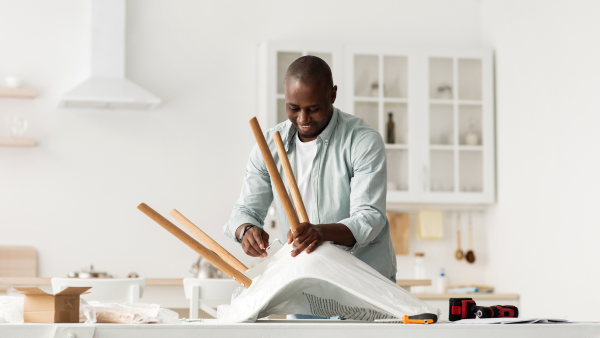
Dismantling furniture not only makes it easier to carry, it also helps you avoid damaging your walls, doorways, and belongings. Not all furniture can be disassembled, but most large items can be broken down into smaller pieces. For example:
- Sofas. Legs and arms can be detached. Some are made from modular sections that can be unhooked and moved separately.
- Coffee Tables & Side Tables. Some have legs that can be unscrewed. If they have drawers, you can normally slide them out.
- TV Stands & Media Consoles. Most of their drawers can be unscrewed and removed. Often, their shelving can be taken out as well.
- Bookcases. Flatpack bookcases can be broken down entirely. Solid wood units normally can’t be dismantled, but they often have detachable shelves.
- Beds. Slats, headboards, and footboards can be removed. If you have a curtain bed, you can also detach the bedposts and dismantle the overhead frame.
- Dressers. While their legs are normally attached, their drawers can be taken out and shipped separately.
- Dining Tables. In most cases, their legs can be removed. Larger tables are often modular, so you can divide them into smaller pieces.
- Dining or Kitchen Chairs. Their legs can normally be unscrewed. Sometimes, you can detach their backs as well.
- Office Chairs. Designed to be shipped and assembled on site, their wheels, legs, arms, and seats can be removed and shipped separately.
After disassembling a piece of furniture, take a moment to wipe it down. It’s the best way to remove hair, dirt, and grime in joints and crevices that are normally inaccessible. Water and mild dish soap work best, but there are a wide range of commercial cleaning products that are equally effective.
Organize Hardware
After disassembling your furniture, store the fasteners (nuts, bolts, screws, etc.) in a plastic bag. Hardware for simple items can be stored in a single bag, but for large, complex pieces, consider placing the fasteners for each component in separate containers. This makes it easier to sort and find the parts you need when reassembling your furniture. Make sure each bag is clearly labeled, in case you lose track of them during the unpacking process.
One of the best ways to keep track of your hardware is to attach it to the component it belongs to. While this is a convenient technique, applying tape directly to your furniture can damage the finish. Tape hardware in place only after you’re done wrapping each piece. If you can, attach it to the underside of your furniture. It’s a non-contact area that minimizes the risk of friction and damage.
Protect Your Furniture
Moving can be hard on your furniture. Even furniture that’s been property secured is still vulnerable to dents, chips, nicks, and scuffs. Movers do their best, but can’t guard against every eventuality, so follow proper packing techniques to avoid damage. This includes:
- Protective Wrapping. After you’ve finished dismantling your furniture, bundle large components with moving blankets and smaller ones with bubble wrap, for cushioning and scratch protection. If you run out of moving blankets, towels, quilts, and comforters also work ‒ the thicker the better.
- Edge and Corner Protection. Corner guards are designed to provide additional cushioning for the most vulnerable parts of your furniture. Made from foam, gel, or plastic, they slip over corners, making them more resilient. Edges are also natural focal points for stress, impact, and friction. Cover them with sheets of corrugated cardboard to help absorb the bumps and jolts that accompany long-distance relocations.
- Stability and Moisture Protection. Once blankets and padding have been applied, secure them by covering the object in a layer of plastic stretch wrap. This holds the packing material in place while also providing a strong barrier against rain and humidity.
Load Strategically
People hire professional movers because they’re familiar with safe loading techniques and know how to stack and secure items. However, if you prefer the DIY approach:
- Create a clear path through your home. The fewer obstacles you have to navigate, the less likely you are to have an accident.
- Use a furniture dolly or furniture straps to move furnishings instead of carrying them by hand. It’s not only easier, it also keeps your furniture stable and minimizes the risk of drops.
- Load your largest and heaviest items first. Place them against the wall at the back of the truck, to ensure their weight is evenly distributed between the axles. If you run out of room at the back, place them against the side walls instead.
- Anchor them to the truck with ratchet straps. If the straps aren’t padded, add some cardboard sheets to prevent them from digging into your furniture. Hook the ends of the strap to a wall rail or D-ring, then tighten until snug.
Because moving trucks are confined spaces, many homeowners stack objects on top of their furniture. Professionals do this as well, but cautiously. While a single box might be light, their cumulative weight can lead to warping, bending, or cracking, so be careful to avoid overloading.
Final Considerations
Preparing furniture for a long-distance move takes time and effort, so don’t rush the process. Shortcuts increase the risk of damage. Since you rely on furniture for day-to-day living, much of it will have to be left until close to moving day.
To prevent yourself from becoming overwhelmed, create a schedule, starting with the items you use least. This might require you to hop from room to room, first taking apart a coffee table in your living room, then a nightstand in your bedroom before disassembling your sofa and bed a few days later.
Remember, furniture takes a while to dismantle, don’t save it until moving day. Make sure everything is prepared the night before, so you can focus on getting it safely loaded into the van. Finally, ask for professional help when dealing with complex, oversized, and vintage items. They’re not only difficult to transport but often require special handling in order to protect and preserve their value.
North American Household Moving Services
North American provides comprehensive moving services built around your needs, schedule, and budget. Whether you need help preparing a few items or packing your entire household, our relocation teams have the skills, tools, and experience necessary to ensure your relocation runs smoothly from beginning to end. Contact us today for a free quote!
