
How to Move with a Baby
Key Takeaways
- Before anything else, visit your pediatrician to ensure vaccinations are current, prescriptions are renewed, and medical records are in hand — and identify a new doctor at your destination before you arrive.
- To reduce safety risks, avoid packing too far in advance, use sturdy boxes that aren't completely full, and keep boxes out of reach of mobile babies and toddlers.
- Keeping the nursery intact until the last possible moment — and setting it up first upon arrival — helps maintain the familiar environment that infants and toddlers depend on for stability.
- Hiring a babysitter for moving day and sticking as closely as possible to feeding, nap, and bedtime routines throughout the process helps keep your child calm and reduces stress for the whole family.
Moving with a baby is certainly a challenge, but with careful planning and the right mindset, it can be done smoothly, with minimal fuss. Since your child’s safety, health, and happiness is always top priority, this guide will offer practical tips for how to care for your newborn, infant, or toddler at every stage of the journey to your new home. For all you moms and dads out there, whether you’re relocating for work, weather, or family, here is how to move with a baby.
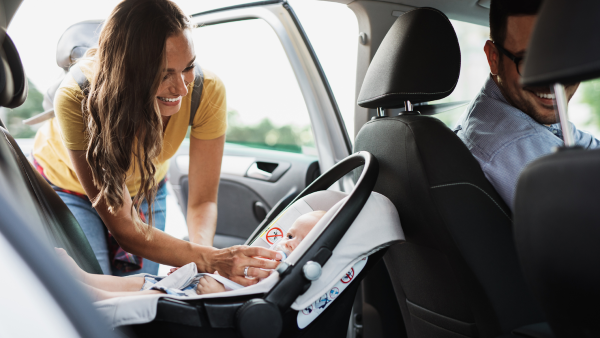
Talk to Your Pediatrician
Under most circumstances, booking a moving company would be your first task after deciding to relocate. However, when moving with a baby, scheduling an appointment with your pediatrician should be your primary concern. Make certain your child is up to date on their vaccinations and renew any prescriptions they may have, such as eczema cream or reflux medications.
If you’re moving long-distance, you’ll also need your baby’s medical and immunization records, as well as the name of a new physician to ensure continuity of care. Your current pediatrician may be able to recommend someone in your new hometown or at least give you some advice on how to find one. Having a doctor lined up before you arrive makes a huge difference. You don’t want to be caught scrambling if your child wakes up with a cough the day after you move in.
Pack Safely
When you’re packing with an infant or toddler, timing is everything. Living in rooms full of boxes isn’t only uncomfortable, it’s potentially dangerous. A strong push could topple them over, damaging everything inside. Worse, they might fall on your child and injure them. Most experts recommend you start packing early, perhaps even a month before your move, but when you have a baby, it’s normally better to wait as long as you can ‒ no sooner than two weeks, if possible.
Watching a child while organizing your belongings is a challenge. One of the best strategies is to take the day off and box up as much as you can while your son or daughter is in daycare, with family, or at the babysitter’s. Without the need to split your attention, you’ll be surprised at how much you can get done and how quickly. If you must pack while they’re at home, hire a babysitter, take turns with your spouse, or ask family to help. One of you looks after the baby while the other works, then trade places when you feel tired. You may even be able to pack a few boxes during naptime.
To minimize risk, use sturdy boxes, but don’t fill them all the way. Leave at least a quarter of the space empty. That way, if there’s an accident, it won’t be too serious. Use small boxes for heavy objects and big boxes for light ones. Babies are curious, so if they’re mobile, it’s likely they’ll want to come in and explore. To keep their children from getting underfoot, most parents close off the rooms they’re working in. As an extra precaution, you may want to keep your boxes in a designated storage space where little hands can’t get to them.
Save the Nursery for Last
Infants and toddlers do best in familiar surroundings, so try to keep the nursery intact until a day or two before moving. Most experts recommend making the crib the last piece of furniture you disassemble and the first one you set up again when you arrive at your new home. Store the nuts, bolts, and screws in a sealed plastic bag taped to the frame or slats, so you don’t need to spend time searching for them.
Create a Bag for Baby Essentials
Baby bags serve two functions ‒ to keep the baby comfortable during the journey and help them settle in once they arrive. If you’re only traveling a short distance, your ordinary diaper bag will suffice. However, if you’ll be on the road for more than a day, you might want to include a few extra items. Depending upon your baby’s age, this might include:
- Change of Clothes
- Portable Cooler (For Milk and Formula)
- Snacks
- Bib
- Portable Crib or Bassenet
- First Aid Kit
- Baby Shampoo
- Baby Body Wash
- Moisturizer
- Toothpaste
- Finger toothbrush
- Soft Hair Brush
- Nail Clippers
- Baby Sunscreen
- Outlet Covers
- Corner Protectors
- Toys and Books
- Comfort Blanket or Stuffed Animal
- Plastic Bags (For Dirty Clothes and Diapers)
With everything disassembled or in boxes, the first few days in your new home are bound to be busy. To help streamline unpacking and setup, bring enough diapers, wipes, and clothing to last one or two days until you get the nursery organized. That way you can focus on arranging your household rather than running errands or digging through boxes for baby supplies.
Stick to Routines
Maintaining a consistent schedule is important for your child’s well-being, especially when you’re moving. Infants and toddlers prefer life to follow a predictable daily pattern, so to help your little one stay calm and content, do your best to work around naps, feeding, and bathtime routines.
Hire a Babysitter
Directing movers, handling last-minute tasks, and supervising the loading and unloading process is hard enough without having to care for a child at the same time. Instead of trying to do it all yourself, ask a friend or family member to watch your baby while you focus on getting your belongings safely on and off the truck. If you’re moving into an area where you don’t know anyone, consider contacting a nanny or professional babysitting service to give yourself a little extra help while moving into your new house.
Prepare for Travel
If your move involves long-distance travel, you’ll need to center the trip around your baby’s needs. Parents who are flying should contact the airline ahead of time and ask about their policy for traveling with infants and toddlers. Most companies allow you to check a car seat or stroller at the gate for free. Besides diapers, baby wipes, and formula, airlines also recommend you pack a few comfort items in your carry-on bag, such as:
- Security Blanket
- Favorite Pillow
- Small Toys
- Pacifier or Teething Ring
Pacifiers are not only calming, they also help your child adjust to altitude changes, as do nursing and bottle feeding. If your baby is a little older, make sure they drink plenty of water while on the flight and bring a few snacks as well. Sucking and swallowing is one of the best ways to relieve ear pressure.
Parents who choose to drive will need to organize their trip around their child’s feeding and changing schedule. Before setting out, check the map for restaurants, service centers, and rest stops along the way, so you know where you can pull over if your baby starts to get fussy. Because it’s important to stick to routines even on the road, choose hotels you can reach every day before bedtime. Make sure your baby bag is always within easy reach as well, so you can change or feed your child without having to unpack.
Hiring a moving company simplifies the relocation process, but if you prefer the DIY approach, remember that car seats cannot fit and are not permitted in commercial trucks. One parent must transport the baby in their personal vehicle while the other drives the moving van.
Set Up the Nursery First
Once you arrive at your new home, re-establishing your child’s routine should be your primary goal, so prepare the nursery before organizing the other rooms of your house. Being able to sleep in their crib and play with their toys helps create a sense of normalcy while they transition into their new home.
Keep in mind that if your child has learned to walk or crawl, they’ll be eager to explore the new space they’re in, so babyproof each room as you go. Install cabinet locks, cover sharp corners with pads, and make sure dressers, bookcases, and televisions are secured to the wall. If there are multiple floors, add safety gates to the top and bottom of the stairs before you unpack.
Take Care of Yourself
Most newborns don’t start sleeping through the night until they’re 3-6 months old, which means until then, parents are likely operating on little sleep themselves. Moving can be tiring, so for the sake of you and your family, don’t push yourself too hard.
There’s a temptation to stay up late and get up early to pack and prepare, but in many cases that’s counterproductive. People are more likely to make mistakes when they’re exhausted, so make sure you’re well rested. Give yourself a few extra days to pack and make sure at least one parent gets a full night’s sleep before moving day and while you’re out on the road. It’s the best way to ensure your move runs safely and smoothly.
Hire Full-Service Movers
One of the easiest ways to move with a baby is to get someone else to do the heavy lifting. Full service moving companies handle every stage of your relocation from start to finish. They not only help with planning and shipping, they can also pack your belongings and disassemble your furniture before loading it onto the truck. If there’s a delay between your move-in and move-out dates, they can coordinate storage and will even help set up your new home when the time comes. For parents with small children, this saves an enormous amount of hassle ‒ allowing them to focus on their family rather than the labor and time-intensive aspects of their relocation.
North American Moving Services
No matter how far you’re going, North American Van Lines delivers reliable, long-distance relocation services. We’ve been assisting families and homeowners for more than 90 years ‒ helping them pack, store, and ship their belongings across the country and all over the world. Start your journey today by contacting us for a free quote!
