

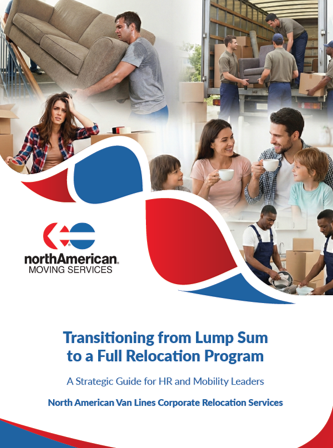
Transitioning From Lump Sum to a Full Relocation Program
A Strategic Guide for HR and Mobility Leaders
For years, lump sum relocation programs have been a popular solution for companies seeking simplicity and cost predictability. By providing employees with a fixed amount and allowing them to manage their own move, organizations reduce administrative burden and maintain budget control. In some situations, this approach still works. However, as workforce expectations evolve and relocation becomes a more strategic component of talent acquisition and retention, many organizations are discovering that lump sum programs alone no longer meet the needs of their people or their business.
Relocation today is not simply a logistical exercise. It directly impacts employee experience, productivity, engagement, and long-term retention. A poorly supported move can distract a new hire, delay ramp-up, or even cause a candidate to decline an offer. A well-designed relocation program, on the other hand, can serve as a powerful differentiator in competitive talent markets.
This guide is designed to help HR, Talent Acquisition, and Mobility leaders understand when lump sum programs make sense, where they introduce risk, and how to thoughtfully transition toward a more structured, full relocation approach.
Why Many Organizations Start With a Lump Sum Benefit
Lump sum programs are often appealing because they are easy to administer and straightforward to communicate. They provide flexibility for employees and allow companies to set a defined relocation budget per move. For entry-level hires, short-distance relocations, or employees who prefer to manage their own arrangements, lump sum can be an appropriate solution.
However, these programs also shift responsibility, financial risk, and logistical complexity to the employee. Employees may be required to front significant out-of-pocket expenses, coordinate multiple vendors, and navigate an unfamiliar moving process during an already stressful life transition. Over time, these challenges can negatively impact satisfaction, performance, and retention.
The Hidden Limitations of Lump Sum Programs
While lump sum programs appear cost-effective on the surface, many organizations underestimate the indirect costs they create. Employees may select unvetted or unlicensed providers, increasing the risk of service failures, delays, or claims issues. HR teams often find themselves stepping in to resolve problems they assumed the employee would manage independently.
Lump sum programs also provide limited visibility into the actual relocation experience. Without centralized coordination, companies may struggle to understand actual costs, identify recurring issues, or ensure consistent service levels across locations and employee populations.
As organizations grow, relocate higher-level talent, or expand into new markets, these limitations become more pronounced.
Understanding the Shift to Full Relocation Programs
Full relocation programs are designed to remove friction from the employee experience while providing organizations with greater control, visibility, and consistency. Rather than reimbursing expenses after the fact or leaving employees to manage the process on their own, full relocation programs coordinate services through trusted providers and established processes.
These programs typically include professional household goods moving, dedicated move coordination, temporary housing, home sale or rental assistance, and destination support services. By managing the relocation end-to-end, companies reduce stress for employees and minimize disruption to business operations.
Importantly, full relocation does not mean one-size-fits-all. The most effective programs are structured to align service levels with job roles, seniority, and business objectives.
Using Tiered Programs to Balance Cost and Experience
Many organizations transition from lump sum to full relocation by adopting tiered or Core/Flex program structures. These approaches allow companies to provide consistent core benefits while maintaining flexibility and cost control.
Tiered programs enable organizations to:
Offer enhanced support for critical roles and senior leadership
Provide appropriate levels of assistance for early-career or short-distance moves
Maintain predictability while scaling relocation benefits
Align relocation investment with talent strategy
By defining clear benefit tiers, companies create transparency for employees and internal stakeholders while ensuring resources are allocated where they have the greatest impact.
When It’s Time to Reevaluate Your Relocation Policy
Organizations often reassess their relocation approach when they experience growth, increased hiring competition, or rising employee dissatisfaction. Other common triggers include higher relocation volumes, inconsistent service outcomes, or difficulty managing costs across different move types.
If your relocation policy has not been reviewed in several years, or if your workforce has changed significantly, it may no longer reflect your current needs. Transitioning away from lump sum does not require an immediate overhaul, but it does require thoughtful planning and expert guidance.
Building a Relocation Program That Supports People and Business Goals
Successful relocation programs are not built around transactions. They are built around people. When employees feel supported during a move, they are more likely to stay engaged, productive, and committed to the organization. At the same time, well-designed programs help HR and mobility teams manage costs, reduce risk, and deliver consistent experiences.
This guide provides a framework for evaluating your current approach, understanding available program models, and making informed decisions about how to evolve your relocation strategy over time.
👉 Download the supplemental Moving Benefit Checklist to help make this transition.
To discuss your program or request a free policy review, contact:
Bobbi Maniglia, Vice President of Corporate Moving & Relocation Services
Bobbi.Maniglia@northAmerican.com | 800.213.4910